
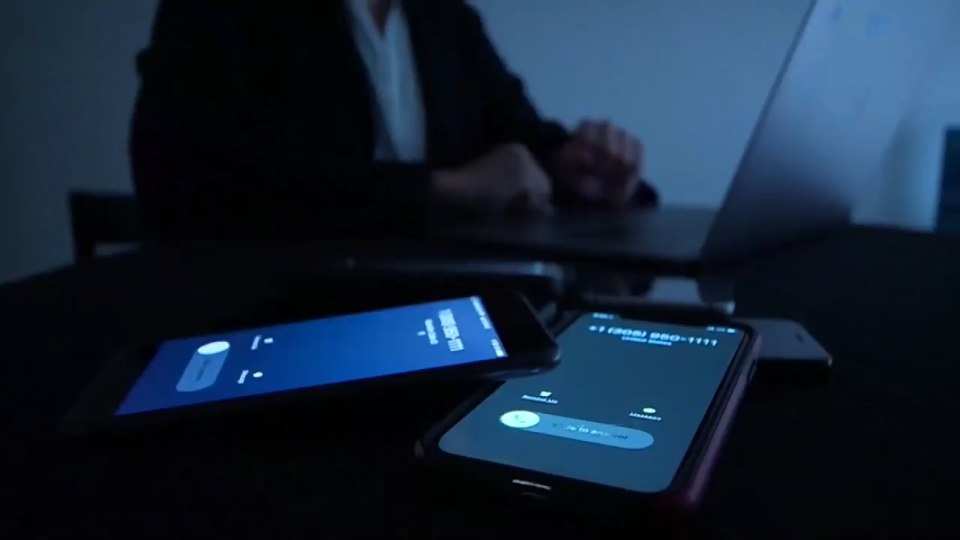
Political texts are piling up on phones ahead of next week’s midterm Election Day, leaving some voters frustrated and wondering how senders got their numbers in the first place.
Lamont Williams said the messages have become difficult to ignore.
“They’ve been bum rushing me with them, you know, on both sides,” Williams said.
Karen Arencherer expressed similar frustration.
“I didn’t ask for them. I don’t need them,” Arencherer said.
“Kind of fed up with them because it’s just continuous,” Arencherer said.
Samuel Woolley, an associate professor at the University of Pittsburgh who has researched how technology can influence public opinion, said personal data and the country’s privacy protections play a role in the volume of messages people receive.
“The first thing that people should know is that our data privacy laws are pretty weak in the United States,” Woolley said.
Woolley said some political messages are sent through large-scale texting operations that can reach people well beyond a particular campaign’s target area.
“Oftentimes, the political texts that you’re receiving are coming from these text centers that are massive centers…” Woolley said.
“Send texts to people that they don’t even know that aren’t even in their municipality and that don’t care about the issues that they’re texting about,” Woolley said.
Williams said the messages have left him wondering where senders got his information.
“I’m always questioning how do they get my number?” Williams said.
Woolley described the system as “pay to play” and said it can be difficult to determine who is behind a particular political message.
“It’s pretty hard to litigate against people that are targeting you with political texts because it’s hard to know where they even begin,” Woolley said.
What can you do about political spam texts?
There are several options available to people who want to cut down on unwanted messages.
AT&T, Verizon and T-Mobile allow customers to report spam messages. Apple and Google also offer filtering systems that can screen messages from unknown senders and move them into separate folders. Users can also block individual senders.
Woolley said there are online services people can sign up for in an effort to remove their information from lists, although those measures have limitations.
“There are other different entities online, things that you can sign up with in an attempt to try to get yourself off of lists…” Woolley said.
For voters who have dealt with repeated political calls and texts, those tools may offer some relief. Johnny South said he has previously been inundated with both.
“I got thousands of phone calls and text messages before…” South said.
Woolley said broader legislative changes may ultimately be needed to address the problem.
“People should absolutely advocate to their representatives,” Woolley said.
This story was originally reported for broadcast by NBC DFW. AI tools helped convert the story into a digital article, and an NBC DFW journalist edited it again before publication.


